
Hair Thinning in Women and Men: What Causes It and What Can You Do About It?
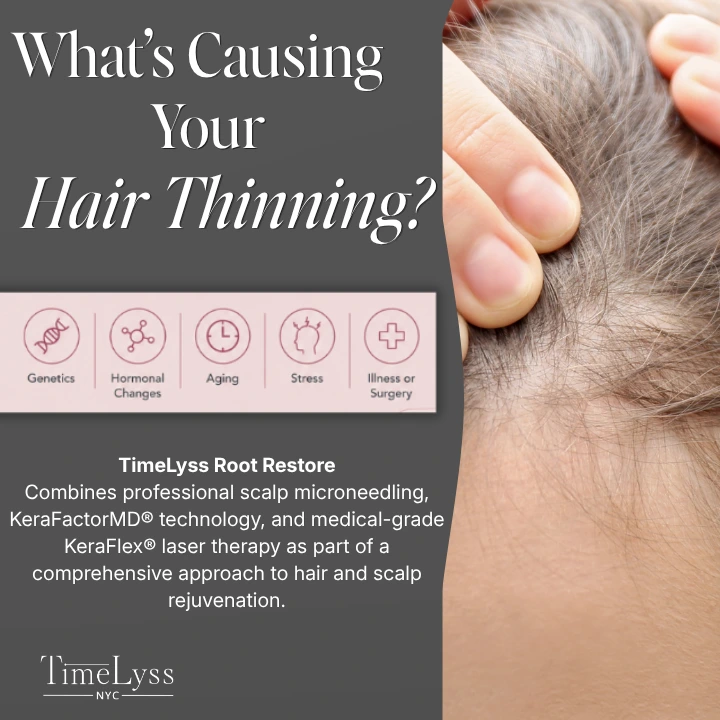
Hair thinning can happen gradually or seem to appear almost overnight.
Maybe your part looks wider than it used to. Your ponytail feels smaller. You are seeing more hair in the shower. Your temples are becoming more noticeable. Or you simply feel like your hair no longer has the density and volume it once did.
The important thing to understand is that hair thinning is not one single condition, and there is no single treatment that is appropriate for every type of hair loss.
Genetics, hormones, stress, illness, weight changes, aging, scalp health, medications, nutrition, and other medical factors can all play a role.
The American Academy of Dermatology also provides information about the different causes of hair loss and why identifying the underlying cause is an important first step.
At TimeLyss MedSpa on Manhattan's Upper West Side, we take a scalp-first approach to cosmetic hair rejuvenation. Our goal is to understand what you are seeing, determine whether a non-surgical treatment may be appropriate, and create a plan designed to support the scalp and hair follicles over time.
What causes thinning hair?
Hair grows through a cycle consisting of different phases. When that cycle is disrupted or hair follicles begin to miniaturize, you may notice increased shedding, slower growth, finer strands, or decreasing density.
Some common contributors to thinning hair include:
- Genetics and androgenetic alopecia
- Hormonal changes
- Aging
- Significant physical or emotional stress
- Illness or surgery
- Postpartum changes
- Sudden weight loss
- Certain nutritional deficiencies
- Thyroid or other medical conditions
- Changes in scalp health
That distinction matters because successful hair restoration begins with identifying the likely reason for the change. For people exploring regenerative approaches, you can also learn more about how PRP injections may be used for thinning hair.
For example, someone experiencing gradual thinning around the crown may require a different approach than someone who suddenly begins shedding large amounts of hair following an illness.
What does early hair thinning look like?
Hair loss does not always begin with an obvious bald spot.
In fact, some of the earliest changes can be surprisingly subtle.
You may notice:
A widening part. More scalp becomes visible when you part or style your hair.
Reduced density. Your hair may feel less full even though you cannot identify one specific area of hair loss.
A thinner ponytail. This can be one of the first signs of decreasing overall density in people with longer hair.
Changes around the temples or hairline. The frontal hairline may gradually become thinner or appear to recede.
More shedding. You may notice more strands than usual when washing, brushing, or styling your hair.
Finer hair. Individual hairs may gradually become thinner, making the hair look less dense even before significant hair loss becomes obvious.
Addressing these changes earlier may provide more options than waiting until an area has experienced significant or longstanding hair loss.
What is androgenetic alopecia?
Androgenetic alopecia is a common form of progressive hair loss that can affect both women and men.
It is often associated with gradual changes rather than sudden shedding.
Depending on the individual, those changes can include thinning over the crown, a widening part, frontal recession, or reduced overall hair density.
The KeraFactor treatment information identifies patients experiencing androgenetic alopecia, gradual crown loss, frontal recession, or thinning of the part among potential candidates for its scalp-rejuvenation system.
Because progressive thinning can have multiple contributing factors, an evaluation is important before deciding on a treatment plan.
Can stress cause your hair to fall out?
Yes. Certain physical or emotional stressors can disrupt the normal hair-growth cycle and lead to a form of shedding known as telogen effluvium.
Unlike gradual hereditary thinning, telogen effluvium may occur several months after a triggering event.
Potential triggers can include childbirth, illness, surgery, significant weight loss, and thyroid imbalance. The KeraFactor clinical information notes that shedding may begin approximately three to six months following a stressor.
This is one reason timing matters when evaluating hair loss. The event contributing to today's shedding may have happened months earlier.
When an underlying medical issue may be involved, that condition should be appropriately evaluated and managed before or alongside cosmetic hair-restoration treatment.
Can losing weight cause hair shedding?
Significant or rapid weight loss can be associated with temporary hair shedding in some people.
Changes in nutrition, calorie intake, hormones, and physical stress on the body can affect the hair-growth cycle. The shedding may not necessarily occur while the weight is being lost; it can become noticeable several months afterward.
That does not mean everyone who loses weight will experience hair loss, and it does not mean every episode of hair loss following weight loss is caused by the weight change.
Sudden or significant shedding deserves appropriate evaluation, particularly when accompanied by other symptoms.
Can you regrow thinning hair without surgery?
There are non-surgical approaches designed to support scalp health and the appearance of thicker, fuller hair, including treatments such as PRP for hair restoration, depending on the underlying cause of thinning and individual candidacy. Another option that may be considered for appropriate candidates is platelet-rich plasma (PRP) treatment, which can be used as part of a personalized approach to hair restoration.
At TimeLyss, our new Root Restore™ protocol approaches hair and scalp rejuvenation through three complementary technologies rather than relying on one modality alone:
1. Professional scalp microneedling
2. KeraFactorMD professional scalp serum
3. KeraFlex medical-grade low-level laser therapy
TimeLyss offers a range of non-surgical aesthetic and wellness treatments, with recommendations based on each patient's individual concerns and goals.
The goal is to create an environment that supports scalp and follicular health while progressively improving the appearance of hair density and thickness.
How does scalp microneedling work for thinning hair?
Scalp microneedling creates precise, controlled microchannels within targeted areas of the scalp.
At TimeLyss, professional DermaPen microneedling can be customized to areas such as the hairline, temples, widening part, crown, and areas of diffuse thinning.
Microneedling serves two purposes within the Root Restore protocol.
The treatment schedule can vary depending on the area being treated and the individual's goals. You can also learn more about how often professional microneedling treatments may be recommended.
First, the controlled treatment stimulates the scalp's natural rejuvenation response.
Second, it prepares the treatment area for application of the concentrated KeraFactorMD professional serum.
This allows microneedling to become one component of a larger scalp-rejuvenation strategy rather than a standalone treatment.
What are growth factors for hair and scalp rejuvenation?
Growth factors are signaling proteins involved in a variety of cellular processes throughout the body.
KeraFactor uses biomimetic polypeptides, meaning the compounds are synthetically created with the same chemical structure as their human counterparts so they can mimic naturally occurring compounds.
Importantly, the KeraFactorMD serum contains synthetic compounds and does not contain compounds extracted from humans, animals, or plants.
The professional formulation used as part of Root Restore contains a proprietary combination of biomimetic growth factors and scalp-supporting compounds.
Individual KeraFactor growth factors are also encapsulated in protective nanoliposomes measuring less than 200 nm, which are designed to improve delivery through the hair duct and into targeted areas of the epidermis surrounding the follicle.
The advanced formulation also incorporates technologies including Follistatin, PDRN (polydeoxyribonucleotide), and NanoFluorosome™ technology.
What is PDRN for the scalp?
PDRN stands for polydeoxyribonucleotide.
Within the KeraFactorMD formulation, PDRN is incorporated as part of its scalp-supporting technology. The manufacturer describes it as supporting cellular activity, rejuvenation, and the environment surrounding the hair follicle.
Rather than treating PDRN as a standalone hair-loss solution, TimeLyss incorporates it as one component of the broader Root Restore protocol.
Does red light or laser therapy help thinning hair?
Low-level laser therapy, commonly abbreviated LLLT, uses specific wavelengths of light to support hair and scalp health.
The KeraFlex system used with Root Restore features 302 true laser diodes at a wavelength of 650 nm rather than LEDs.
According to the KeraFactor treatment information, the 650 nm wavelength is used to support scalp circulation, oxygen and nutrient delivery, the anagen or growth phase of the hair cycle, hair density and thickness, and overall scalp health.
With Root Restore, KeraFlex therapy is performed after the professional serum has been applied, completing the three-step in-office treatment.
Why combine microneedling, a scalp serum, and laser therapy?
Hair thinning is complex.
That is why TimeLyss Root Restore was designed as a multi-modal scalp and hair rejuvenation protocol rather than a single treatment.
Each component has a different role:
DermaPen microneedling creates controlled microchannels and stimulates scalp rejuvenation.
KeraFactorMD professional serum delivers concentrated biomimetic growth factors and additional scalp-supporting compounds.
KeraFlex laser therapy provides focused 650 nm low-level laser therapy across the scalp.
Together, the three technologies are designed to support the environment surrounding the hair follicle and improve the appearance of healthier, fuller, thicker hair over time.
How long does it take to see results from hair restoration treatments?
Hair restoration is not immediate because hair grows in cycles.
According to the KeraFactor protocol, many patients may begin noticing improvements in scalp health and increased hair volume at approximately three months.
Maximum improvement may develop approximately six to nine months after completing a recommended six-treatment series, assuming the treatment protocol has been followed.
Results vary significantly from person to person.
The underlying cause of thinning, genetics, age, hormonal factors, degree of follicular miniaturization, medical conditions, lifestyle, and consistency with treatment can all influence response.
What can you do between professional hair-restoration treatments?
Hair and scalp care does not necessarily stop when you leave the office.
For appropriate patients, the TimeLyss Root Restore approach can include at-home KeraFactor products between professional treatments.
The KeraFactor Scalp Stimulating Solution is applied directly to areas of concern once daily and is intended to support scalp and hair health between treatments.
KeraFactor also offers a Scalp Stimulating Shampoo & Conditioner designed to exfoliate and stimulate the scalp while supporting hair that appears fuller, thicker, and healthier.
For patients incorporating at-home laser therapy, KeraFactor recommends using the KeraFlex laser cap for six minutes every other day unless otherwise directed by a healthcare provider.
When should hair loss be evaluated by a medical professional?
Not every type of hair loss belongs in a cosmetic hair-restoration program.
Seek appropriate medical or dermatologic evaluation if you are experiencing:
- Sudden or unexplained significant hair loss
- Distinct patches of complete hair loss
- Scarring of the scalp
- Persistent bald areas
- Signs of an active scalp infection
- Significant scalp inflammation
- Hair loss accompanied by other unexplained health changes
Root Restore may also not be appropriate for people with conditions including alopecia areata, frontal fibrosing alopecia, lichen planopilaris, trichotillomania, or scarring alopecia. KeraFactor products are not intended for patients who are pregnant, nursing, or under age 18.
The goal should never be to simply "treat hair loss." It should be to understand what type of hair loss may be occurring and determine the most appropriate next step.
Hair Thinning Treatment on Manhattan's Upper West Side
If you have noticed a widening part, increased shedding, thinning around your temples or crown, or a general decrease in hair density, you do not necessarily have to wait until the change becomes dramatic to have it evaluated.
At TimeLyss MedSpa on the Upper West Side of Manhattan, Root Restore combines scalp microneedling, KeraFactorMD growth-factor technology, and medical-grade KeraFlex laser therapy into a personalized non-surgical hair and scalp rejuvenation protocol.
Treatment recommendations depend on your individual concerns and candidacy.
Depending on the cause and pattern of thinning, some patients may also explore PRP treatments on the Upper West Side as part of their hair-restoration plan.
Schedule a TimeLyss Root Restore consultation to determine whether the treatment is appropriate for your hair and scalp concerns.
Individual results vary. Hair loss may have medical, hormonal, nutritional, genetic, medication-related, and lifestyle causes. Additional medical or dermatologic evaluation may be recommended before cosmetic treatment.
FAQ: Hair Thinning & Non-Surgical Hair Restoration
I'd keep this section because it gives us clean, concise answer blocks for Google, voice search, and AI retrieval.
What is the best treatment for thinning hair?
There is no single best treatment for every person because hair thinning can have different causes. An appropriate treatment plan depends on factors such as the pattern of hair loss, scalp health, medical history, genetics, hormones, and whether the follicles remain viable.
Can microneedling be used on the scalp?
Yes. Professional scalp microneedling creates controlled microchannels in targeted areas. At TimeLyss, DermaPen scalp microneedling is one component of the Root Restore protocol and is followed by application of KeraFactorMD professional serum.
How long does non-surgical hair restoration take to work?
Hair grows in cycles, so changes typically take months rather than days or weeks. According to the KeraFactor protocol, improvements in scalp health and hair volume may become noticeable around three months, with maximum improvement potentially developing six to nine months after completion of a six-treatment series.
Is Root Restore only for women?
No. Root Restore may be appropriate for both women and men experiencing certain forms of hair thinning, reduced density, recession, or shedding. Candidacy should be determined individually.
Where can I get treatment for thinning hair on the Upper West Side?
TimeLyss MedSpa offers its Root Restore hair and scalp rejuvenation protocol at its Upper West Side location in Manhattan. The treatment combines scalp microneedling, KeraFactorMD professional serum, and KeraFlex low-level laser therapy.
About the author
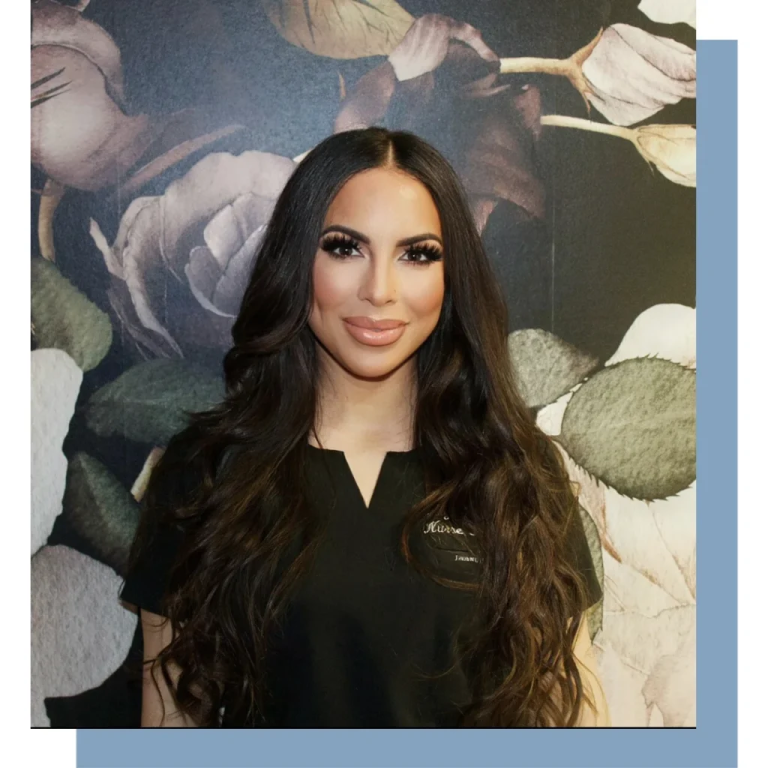
This Is TimeLyss Med Spa
About Dr. Alyssa Casciorizzo, DNP, APRN, FNP-BC, NP-C
As a Doctor of Nursing Practice (DNP) and board-certified Family Nurse Practitioner (FNP-BC, NP-C) with over 8 years of experience, I focus on injectables like Botox, dermal fillers, and Sculptra, along with regenerative treatments such as PRP and advanced skincare solutions. I use cutting-edge techniques and a deep understanding of facial anatomy to create natural, transformative results.
Beyond my clinical expertise, I am a passionate Aesthetic Dermatology Nurse Practitioner dedicated to continuous education. This commitment to learning allows me to provide top-tier care and deliver treatments that leave patients with radiant, rejuvenated skin.